Why Jonlieu exists
One leadership transition changed everything.
That experience shaped Michelle’s belief that successful transitions require more than project management. They require supporting the people living through the change.
The experience behind the work
From classroom teacher to district leader to Positive Psychology Coach: nearly 30 years helping people and organizations learn, lead, and navigate change.
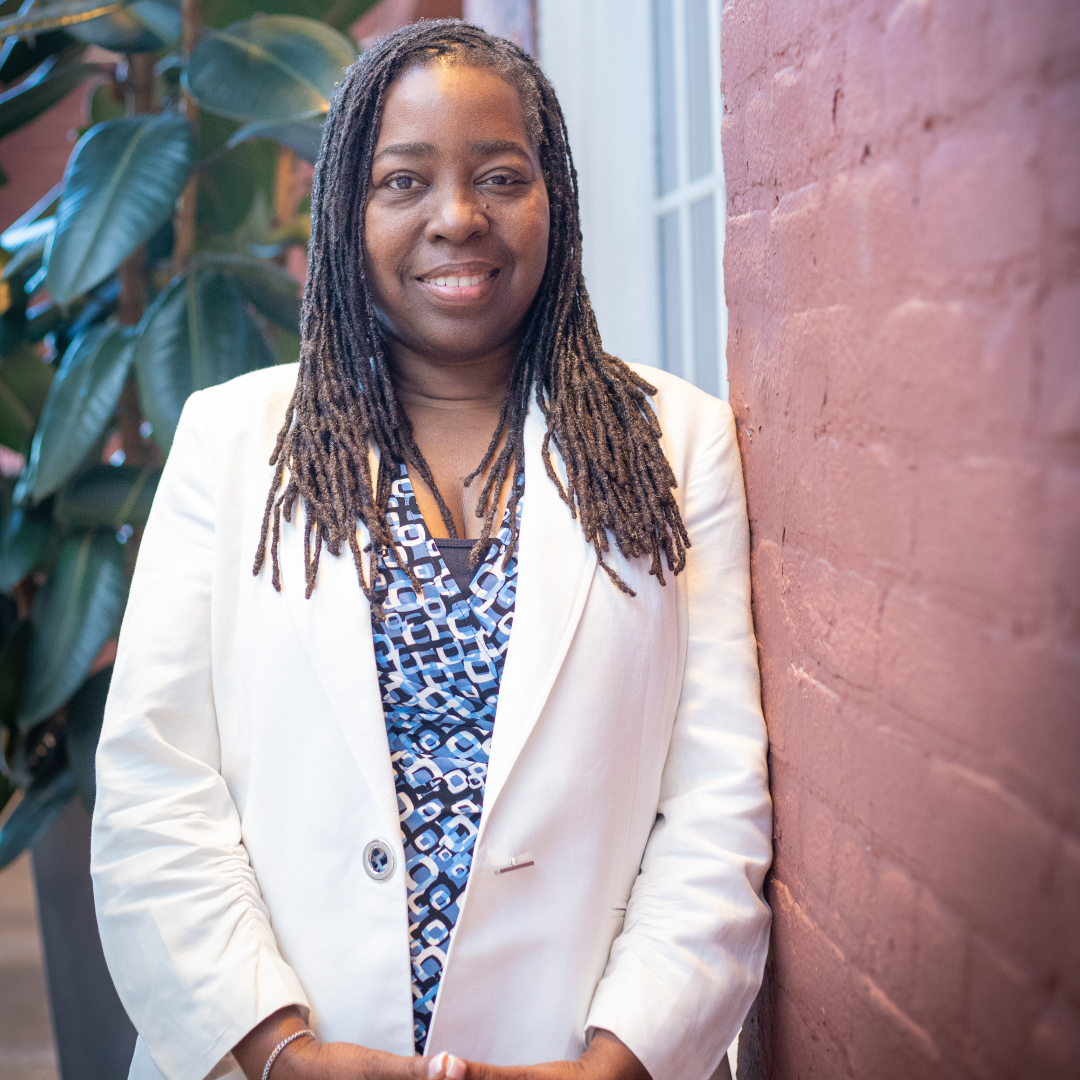
About Michelle

Dr. Michelle Watson-Grant has spent nearly 30 years in education and coaching, seven of them as a district leader. Today she helps organizations in K-12, nonprofits, and other small to mid-sized settings equip managers to navigate disruptive transitions while protecting the resilience, engagement, and well-being that sustain performance. Michelle believes that what happens on the inside shapes what leaders do on the outside, so her work focuses on strengthening the internal conditions that lead to external results.
Michelle started in the classroom and went on to lead at the district level, guiding teams through many transitions, including shifts in district leadership, state and local policy, curriculum, instructional practice, and priorities.
Her proudest work came from leading, training, and coaching the teams who wrote well-designed curricula across multiple disciplines, grade levels, and schools. Morale rose, trust grew, collaboration and engagement improved, and instructional practice shifted in meaningful ways.
Michelle has also spent a decade supporting nonprofit leaders. She has helped nonprofits design training and development, leadership development, and youth curricula, and has done similar youth work in multiple faith-based organizations. She has also served on the boards of more than one organization.
When Michelle began coaching, the same themes kept surfacing. External supports mattered, but internal factors mattered more. That conviction took her back to study, where she trained in positive psychology and coaching.
Michelle holds an EdD in Instructional Technology and Distance Education and an MS in Teaching and Learning, both from Nova Southeastern University. She also served as lead author and series editor with Pearson, and several of her textbooks are still used in classrooms across the Caribbean.
An introvert herself, Michelle is endlessly curious about the internal world. Clients describe her approach as calm, reflective, and thoughtful. She asks questions that help leaders discover their own answers, and she is comfortable letting silence do some of the work. What she wants most for the leaders and teams she works with is the strength to perform well and feel well, however much is shifting around them.
Credentials at a glance
- Credentialed by the International Coaching Federation (ICF)
- Coach certification, Center for Coaching Certification
- Positive Psychology certifications in Resilience, Emotional Intelligence, Strengths, and Motivation & Goal Achievement
- Certified coach, speaker, and trainer, John Maxwell Team
- Design Thinking, Rochester Institute of Technology
- Agile, University System of Maryland
- Coaching specialization certifications: Navigating Transitions, Systemic Team Development, and Burnout Prevention and Recovery
What it’s like to work with Michelle
Michelle asks more than she tells. Her questions help leaders and teams find their own answers, and she backs them with evidence-based practice and practical tools people can use the next day. Sessions are calm, reflective, and unhurried. She also speaks at conferences and leadership events. See speaking fees on the Pricing page.
About Jonlieu
Jonlieu is a coaching, facilitation, and learning practice built on one belief: transitions are experienced by people. Most transition plans focus on the work.
Jonlieu focuses on the people, helping organizations equip managers with the resilience, engagement, and well-being they need to lead through disruptive transitions without sacrificing performance. Every engagement is guided by the Think-Be-Do Coaching Model™, and the work comes together in three connected ways: a workshop series, individual coaching for managers, and speaking.
Jonlieu serves partners across the United States, virtually and on-site by arrangement.
A coaching model that works from the inside out
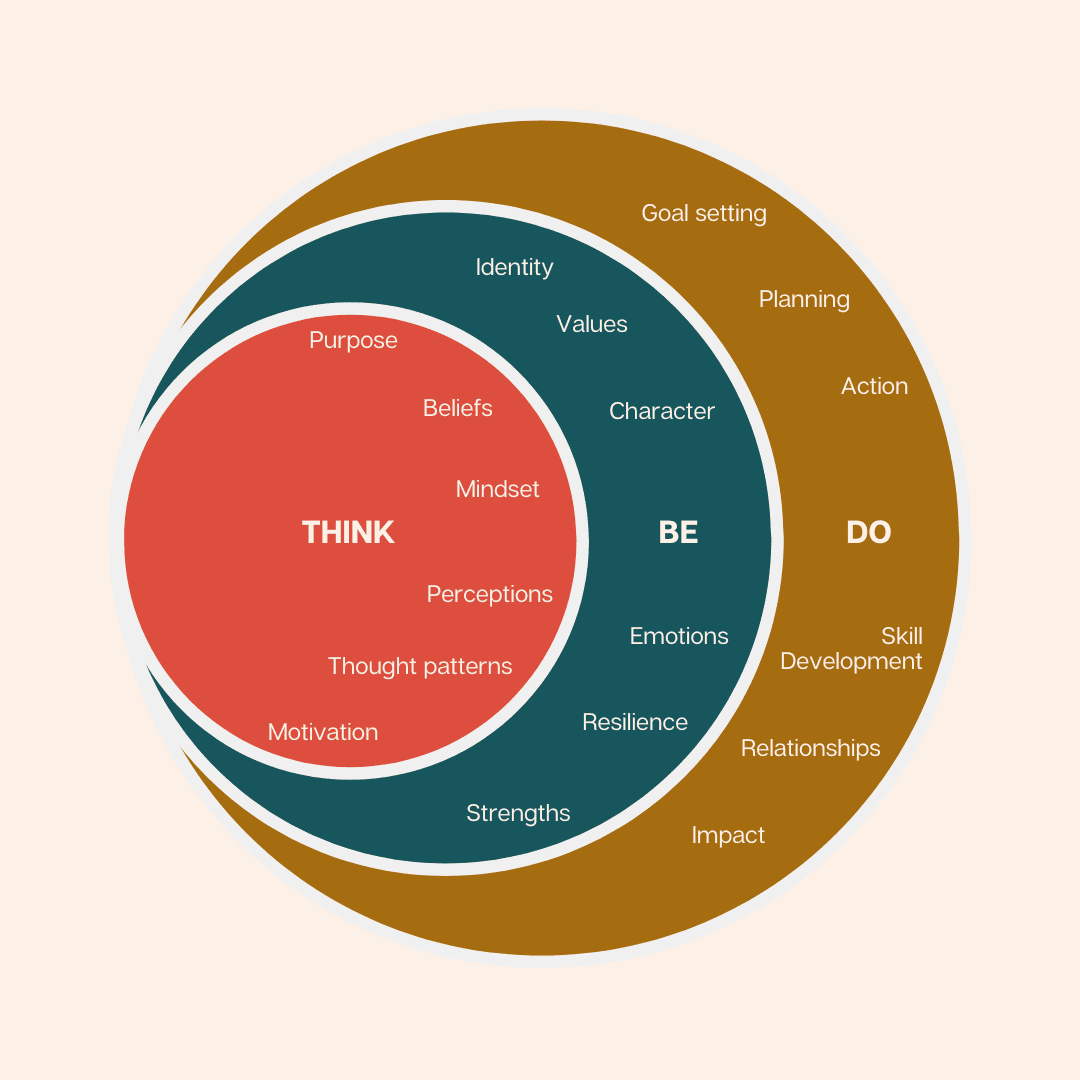
Every coaching engagement runs on the Think-Be-Do Coaching Model™. It starts with how a leader thinks, moves to who they are being, and ends with what they do. It works inside out and outside in, because what happens around a leader shapes what happens within.
Jonlieu’s 5 C’s coaching process
Every session, and the engagement as a whole, moves through five steps.
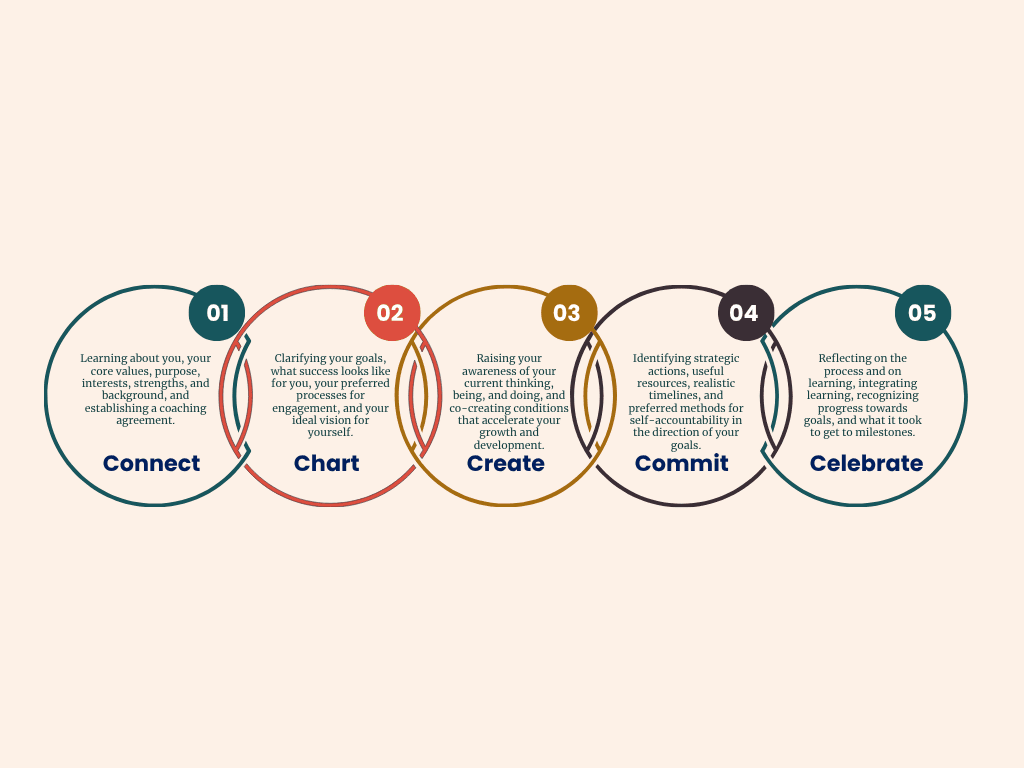
How the 5 C’s shape an engagement
Across an engagement, the same five steps apply. The engagement opens with Connect and a coaching agreement. Chart uses an assessment to show where resilience, engagement, and well-being stand today, and what success looks like. Create turns that awareness into an action plan. Commit sets the accountability that keeps progress moving. Celebrate marks the milestones reached along the way.
What clients say
“Dr. Watson-Grant worked with our future network leaders in a very thoughtful way, not giving them the answers they needed, but guiding them through the process of discovering their own path. Her calm approach helped build trust and reinforced deep reflection throughout our program. We would highly recommend her to anyone looking for a coach that will support you in growth through strong self-discovery.”
“Michelle brought out strengths and ideas within me, helping me recognize and trust them.”
“I gained confidence through challenging questions. I’m leaving with less imposter syndrome.”
“Michelle created space to define success on my own terms with reflective questions.”
“Her thought-provoking questions made me challenge my thinking and lean into discomfort.”
“Through core values conversations, I gained clarity and now lead with greater purpose.”
“She provides a safe, non-judgmental place to work through difficulties.”
“Within 60 minutes, Michelle helped me identify goals and break them into actionable steps.”
“I achieved breakthroughs through her unbiased perspective on challenging team situations.”
“She listened without bias and guided us to find our own solutions to challenges.”
“I learned practical strategies for difficult conversations and feel more confident.”
“She’s great at asking open-ended questions, fostering reflection and initiative.”
“Michelle helped me clarify goals and create a path aligned with my vision and values.”
Let’s talk about the transition you’re in
In a conversation, we talk through the transition you’re in and whether Jonlieu is a fit.